
Semaglutide has revolutionized metabolic health by offering a powerful tool for weight management. However, while the medication handles the biological signaling of hunger, your nutrition provides the essential fuel for transformation. To achieve breathtaking results, a strategic approach to eating is vital to prevent lean muscle loss and maintain vibrant energy.
This comprehensive guide serves as your expert blueprint, combining the latest nutritional science with practical strategies to ensure you lose fat while preserving the muscle tone you deserve.
Understanding the Synergy: How Nutrition Powers Semaglutide
Semaglutide is a GLP-1 (Glucagon-Like Peptide-1) receptor agonist that mimics a natural hormone to regulate appetite and blood sugar. It primarily acts on the hypothalamus to enhance feelings of fullness and reduce "food noise"—the intrusive thoughts about eating. Physiologically, it slows gastric emptying, meaning food remains in your stomach longer, which contributes to prolonged satiety.
When you follow a dedicated semaglutide meal plan for weight loss, you aren't just eating less; you are eating better. Because your total volume of food decreases, every bite must be nutrient-dense to prevent deficiencies and support metabolic markers like insulin sensitivity.
The Pillars of a High-Performance Semaglutide Meal Plan
To thrive on this journey, your plate should be built on three non-negotiable foundations that prevent common side effects like fatigue and muscle wasting.
Priority One: Protein is Your Secret Weapon
Protein is critical for stabilizing blood sugar and promoting fullness. Without adequate protein and resistance training, up to 20-40% of weight lost could be lean muscle mass.
-
Target: Aim to include lean protein in every meal, filling roughly one-quarter of your plate.
-
Sources: Skinless chicken breast, white fish, eggs, tofu, and legumes.
Priority Two: Fiber for Digestive Harmony
Since semaglutide slows digestion, fiber is essential to prevent constipation, a frequent side effect. Fiber-rich complex carbohydrates provide sustained energy and prolonged satiety.
-
Sources: Leafy greens, raspberries, quinoa, whole grains, and chia seeds.
Priority Three: Hydration and Electrolytes
Proper hydration flushes out toxins, aids digestion, and can even amplify weight loss benefits by promoting fullness before meals.
-
Goal: Aim for at least eight glasses of water daily, increasing intake during physical activity.
Why Semaglutide Stops Working: Overcoming the Plateau
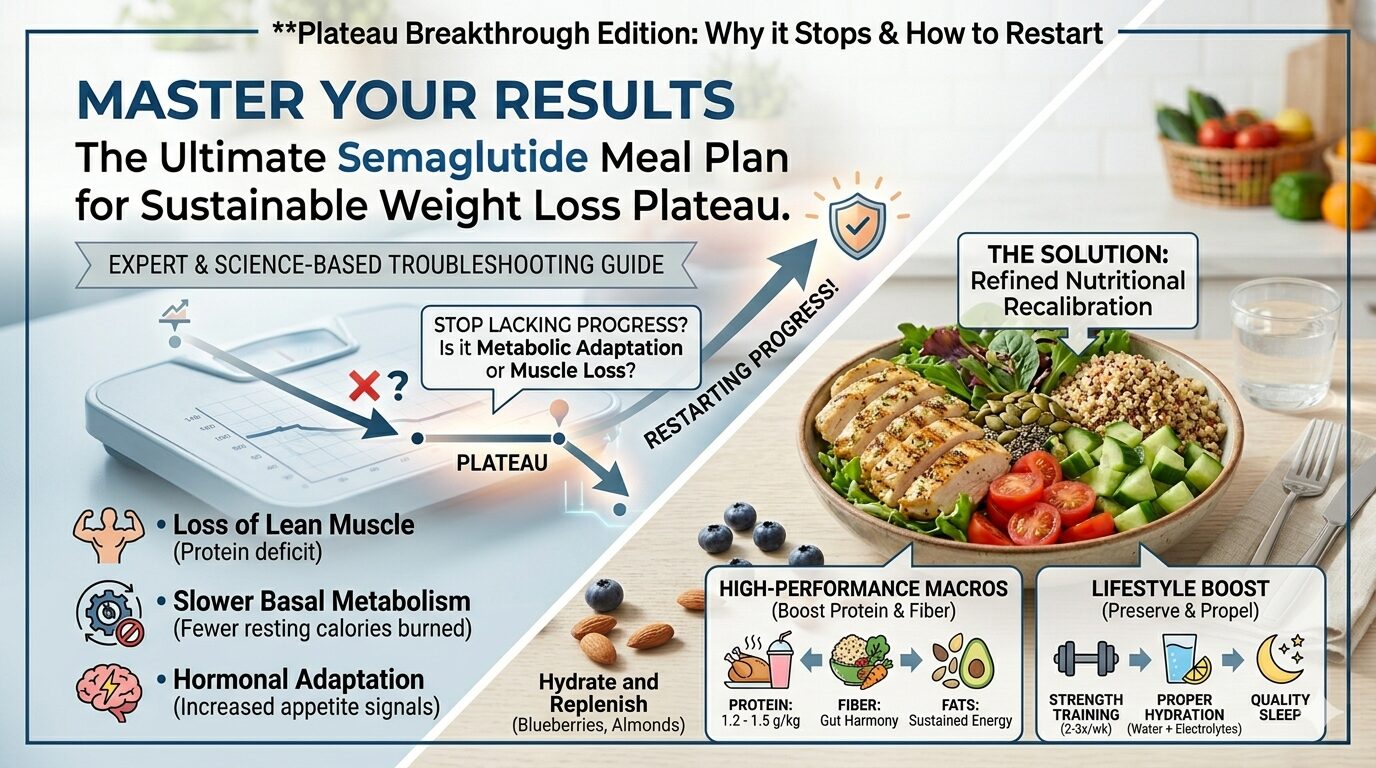
It can be frustrating when progress stalls, but hitting a plateau is a normal and expected part of the weight loss process, even with GLP-1 medications.
The Metabolic Plateau: Why Progress Slows Down
A plateau often reflects a new equilibrium between reduced energy intake and expenditure as your body adapts to your lower weight.
-
Metabolic Adaptation: As you lose weight, your body burns fewer calories at rest and becomes more efficient at energy usage—a process known as adaptive thermogenesis.
-
Hormonal Shifts: Weight loss can trigger compensatory increases in hunger hormones like ghrelin and decreases in satiety hormones like leptin, signaling the brain to eat more.
-
Receptor Desensitization: Over long-term use, GLP-1 receptor signaling may partially desensitize, leading to a diminished effect on appetite suppression.
-
Lean Mass Loss: Losing muscle slows your basal metabolism, making further weight loss more difficult.
A Sample 7-Day Semaglutide Meal Plan for Weight Loss
This plan focuses on high-volume, nutrient-dense foods to maintain a caloric deficit comfortably.
Day 1: The Kickstart
-
Breakfast: Two poached eggs with sautéed spinach and avocado.
-
Lunch: Grilled lemon-herb chicken over mixed greens with vinaigrette.
-
Dinner: Baked salmon with roasted asparagus and a small serving of quinoa.
-
Snack: A handful of raw almonds.
Day 2: Energizing Plants
-
Breakfast: High-protein chia pudding with unsweetened almond milk and blueberries.
-
Lunch: Turkey and cucumber roll-ups with a side of lentil soup.
-
Dinner: Stir-fried tofu with broccoli, bell peppers, and ginger.
-
Snack: Celery sticks with natural almond butter.
Day 3: Mediterranean Fuel
-
Breakfast: Greek yogurt with protein powder and hemp hearts.
-
Lunch: Mediterranean bowl with chickpeas, cucumbers, and grilled shrimp.
-
Dinner: Ground turkey taco salad (no shell) with salsa and Greek yogurt.
-
Snack: One hard-boiled egg.
Day 4: Sustained Satiety
-
Breakfast: Omelet with mushrooms, onions, and feta cheese.
-
Lunch: Tuna salad made with mashed avocado in lettuce cups.
-
Dinner: Roasted cod with mashed cauliflower and green beans.
-
Snack: Cottage cheese with sliced cucumbers.
Day 5: Comfort and Nutrition
-
Breakfast: Smoothie with spinach, vegan protein powder, and flax seeds.
-
Lunch: Cold roast beef slices with pickled vegetables and an apple.
-
Dinner: Zucchini noodles with turkey bolognese sauce.
-
Snack: A small pear and walnuts.
Day 6: Weekend Refinement
-
Breakfast: Scrambled egg whites with smoked salmon and chives.
-
Lunch: Large kale salad with grilled chicken and pumpkin seeds.
-
Dinner: Lean sirloin steak with roasted Brussels sprouts.
-
Snack: Edamame with sea salt.
Day 7: Preparation and Balance
-
Breakfast: Overnight oats with chia, flax, and walnuts.
-
Lunch: Leftover steak or chicken over a fresh garden salad.
-
Dinner: Baked skinless chicken thighs with roasted zucchini and kimchi.
-
Snack: Turkey breast slices.
Strategies to Manage Potential Side Effects
Gastrointestinal issues like nausea, bloating, and stomach pain are common, but mindful eating habits can help mitigate them.
-
Eat Smaller Portions: Try five "mini-meals" instead of three large ones to avoid over-extending the stomach
-
Avoid Fried and Spicy Foods: These are frequent triggers for nausea and acid reflux.
-
Chew Thoroughly: Slower eating helps your stomach manage the delayed gastric emptying.
-
Stop Before You’re Full: Stop eating when you feel roughly 80% satisfied to prevent discomfort.
The Vital Role of Resistance Training
Physical activity is essential to amplify the benefits of semaglutide and jumpstart a stalled metabolism.
-
Add Strength Training: Muscle mass burns more calories at rest than fat, increasing your resting metabolic rate.
-
Preserve Lean Mass: Resistance training helps prevent the catabolization of muscle tissue during a caloric deficit.
-
Frequency: Aim for structured sessions at least two to three times per week.
Frequently Asked Questions (FAQs)
Should I increase my dose if I plateau?
Dose changes must only be made under medical supervision. A plateau is often an opportunity to reassess lifestyle factors rather than immediately increasing medication.
Is it okay to skip meals?
Skipping meals can lead to compensatory hunger later. Even when not hungry, small high-protein snacks can help maintain energy and muscle mass.
What if I am a "non-responder"?
Research indicates approximately 5-10% of individuals may see minimal weight loss despite adherence. If progress is zero after several months, consult a clinician about alternative treatments like Tirzepatide.
Conclusion: Your Future Starts with a Single Bite
Success with a semaglutide meal plan for weight loss is built on consistency and adapting to your body's changing needs. By prioritizing protein, staying hydrated, and incorporating resistance training, you can overcome plateaus and achieve lasting results. Empower your health today!